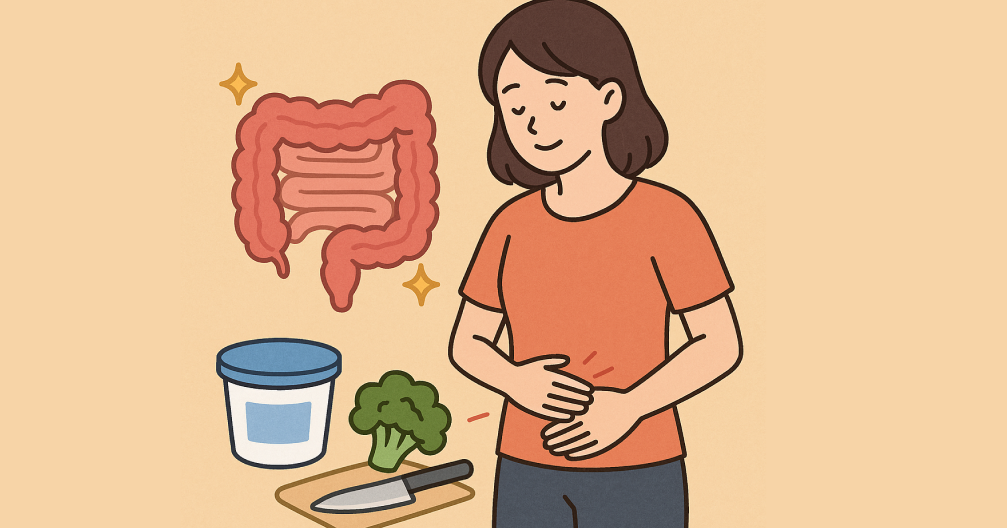
This article is for a wide range of readers, from beginners interested in gut health to those who already pay attention to their gut environment.
We clearly explain the latest information, from the basics of gut health to practical approaches, foods and recipes, and how to use supplements.
It also offers useful information for anyone interested in health, beauty, or weight loss, as well as those concerned about bowel movements or their skin.
Discover new insights into gut health and get tips you can easily incorporate starting today.

What Is Gut Health? The Basics and Why It Matters
Gut health refers to lifestyle habits and dietary changes intended to improve the gut environment.
More than 100 trillion gut bacteria live in the intestines, and they are thought to play a role in maintaining health, beauty, and immune function.
Gut health has attracted attention because improving the gut environment may help support regular bowel movements and healthy-looking skin, and may also have a positive effect on emotional well-being.
Stress, irregular lifestyles, and unbalanced diets make it easy for the gut environment to become disrupted, increasing the importance of gut health.
Gut health is gaining attention as a habit that anyone can adopt, regardless of age or gender.
Gut Health Basics: The Gut Environment and Gut Microbiota
The gut environment refers to the balance of bacteria and other microorganisms in the intestines.
The term “gut microbiota” describes the diverse community of microorganisms living in the gut.
Gut bacteria are generally divided into three types: beneficial, harmful, and opportunistic. A predominance of beneficial bacteria is considered desirable.
When the balance of the gut microbiota is disrupted, bowel movements may become irregular and skin problems may be more likely.
The foundation of gut health is to balance the gut microbiota and support beneficial bacteria.
To do this, it is important to review your diet and lifestyle habits.
・Gut environment = the balance of gut bacteria
・Gut microbiota = the community of microorganisms in the gut
・There are three types: beneficial, harmful, and opportunistic bacteria
How Gut Health Supports Overall Health, Beauty, and Weight Loss
Adopting gut-health habits may help support your health, beauty, and weight-loss efforts.
A balanced gut environment can help promote regular bowel movements and smoother elimination of waste products.
This may, in turn, help support healthy-looking skin.
The gut is also called the “second brain,” and a balanced gut environment may contribute to emotional well-being.
In addition, metabolites produced through the activity of gut bacteria are thought to help limit fat accumulation, offering support for weight loss.
・Helps support regular bowel movements
・Helps promote healthy-looking skin
・Supports weight-loss efforts
・Contributes to maintaining immune function
・Helps support emotional well-being
Goals and Benefits of Gut Health
The main goal of gut health is to support overall health by improving the gut environment.
A healthy balance of gut bacteria can promote intestinal function and may help maintain immune function.
When the intestines move smoothly, bowel movements are more likely to be regular, helping eliminate waste products.
This may also help support a healthy skin turnover cycle.
・Improves the gut environment
・Helps maintain immune function
・Helps support regular bowel movements
・Helps promote healthy-looking skin
・Supports beneficial bacteria
・Supports weight loss and emotional well-being
What to Check Before Starting a Gut-Health Routine
Before starting a gut-health routine, it is important to understand the current state of your gut environment.
Irregular bowel movements, bloating, changes in your skin, or frequent fatigue may be signs that your gut environment is out of balance.
Reviewing your lifestyle and diet, and managing stress, are important for gut health.
・An unbalanced diet (high in fat and sugar, low in vegetables)
・Lack of sleep
・Stress
・Lack of exercise
・Excessive alcohol consumption
How to Assess the Balance of Your Gut Bacteria
At-home gut microbiota or stool tests can offer clues about the state of your gut environment.
More detailed testing is also available at medical facilities.
You can use the results as a reference when considering a gut-health routine that suits you.
・Gut microbiota test kit: Easy to use at home and mail in
・Stool test at a medical facility: Allows for detailed analysis
Lifestyle and Dietary Changes for Gut Health
Diet, exercise, sleep, and stress management are important for gut health.
Along with choosing gut-friendly foods, a regular daily routine, moderate exercise, and adequate sleep can also help.
It is also important to find ways to manage stress and keep your gut warm.
・Eat a substantial breakfast
・Include fiber and fermented foods
・Eat meals at regular times
・Stay well hydrated
・Find ways to keep your gut warm
・Get moderate exercise (yoga, stretching, walking)
・Get quality sleep (at least 7 hours)
・Manage stress (set aside time to relax and enjoy hobbies)
Recommended Foods for Gut Health and Suggested Amounts
Fermented foods and foods containing dietary fiber and oligosaccharides may help support a healthy gut environment.
| Food category | Examples | Suggested intake |
|---|---|---|
| Fermented foods | Yogurt, natto, kimchi, miso | 1–2 servings a day |
| Dietary fiber | Burdock root, oatmeal, vegetables, mushrooms | At least 20 g a day |
| Oligosaccharides | Bananas, onions, soy products | An appropriate amount from food |
Using Gut-Health Supplements and Precautions
Supplements are only intended to play a supporting role; improving your diet and lifestyle habits is fundamental.
Supplements containing lactic acid bacteria, bifidobacteria, or butyrate-producing bacteria are attracting attention as ingredients that support the gut environment.
Some products contain multiple bacterial strains or prebiotics, so it is important to choose one that suits your health and lifestyle.
・Support for beneficial bacteria (lactic acid bacteria, bifidobacteria)
・Nourishment for beneficial bacteria (such as oligosaccharides)
・Support for the gut barrier (butyrate-producing bacteria)
・Avoid excessive intake and adjust according to how you feel
・Consult a doctor if you take medication or are pregnant
Practical Gut-Health Techniques
Gut-health habits can help support regular bowel movements and healthy-looking skin, as well as overall well-being and relaxation.
A gut massage is a self-care technique that encourages intestinal movement. Doing it along with deep breathing may also help you relax.
・Gently massage around your navel in a clockwise direction
・Focus on deep breathing to relax
・Try to make it a daily habit for a few minutes
When to Expect Results from Gut Health Habits
Results vary from person to person, but some people may notice changes in their bowel movements or abdominal comfort in about a week.
With continued practice, you may gradually notice improvements in your skin, overall well-being, and emotional balance.
It is important to be patient and build these habits steadily.
・Changes in bowel movements or abdominal comfort
・Support for skin and overall well-being
・Improved emotional balance and less fatigue
Tips for Maintaining Gut-Health Habits
Maintaining a balanced lifestyle overall is important while your gut environment stabilizes.
Sudden dietary restrictions or lifestyle changes can be stressful, so start gradually with what you can manage.
Try to make these habits easier to maintain by enjoying them with family or friends.
・Focus on balance across your overall lifestyle
・Make gradual changes at a comfortable pace
・Find ways to keep it enjoyable