
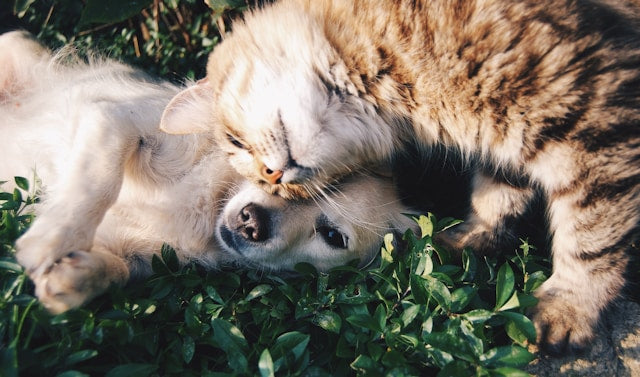
We all want our pets to stay healthy for as long as possible. Lately, the term "gut environment" comes up more and more in conversations about pet food, too.
In this article, we introduce the idea of "gut care" for pets and what you can do in everyday life.
*If diarrhea or constipation continues, or anything else concerns you, please consult your veterinarian first.
What is the gut flora?

Many bacteria live in the gut, and together they are called the "intestinal microbiota" (gut flora). The types and balance of these bacteria are said to change depending on diet, stress, and other factors.
How gut care for pets differs from gut care for people
1. Owners decide what pets eat
People can choose their own meals, but pets eat what they are given. Owners need to think about what food to choose and how much to give.
2. Owners shape the living environment
Pets can't easily change their surroundings or unwind on their own. Providing a calm, comfortable environment matters too.
What you can do in everyday life

Point 1: A balanced diet
Start with a nutritionally balanced food suited to your pet's age and size. Check the ingredient label and choose what works by watching how your pet does after eating.
Point 2: Include dietary fiber and oligosaccharides
Dietary fiber and oligosaccharides are ingredients that serve as food for gut bacteria. These are called "prebiotics." Bacteria themselves, such as lactic acid bacteria and bifidobacteria, are called "probiotics."
Point 3: Moderate exercise and relaxation
Make time both for moderate exercise, such as walks and play, and for calm, relaxing moments.
Point 4: Regular health checks
Regular health checks, and talking with your veterinarian about diet as well, can give you peace of mind.
About Aidaya Shoten's kestose
Aidaya Shoten's kestose is an additive-free powder made from 100% kestose, the smallest unit of oligosaccharide, made up of three sugars. It is made from sugarcane and sugar beet (neither is genetically modified).
Kestose is not a bacterium itself (a probiotic). It is an oligosaccharide (a prebiotic) that reaches the large intestine and serves as food for intestinal bacteria such as bifidobacteria. Its gentle sweetness makes it easy to mix into your pet's usual food.
Daily guideline amount
・Under 10 kg → 1 g
・10–20 kg → 2 g
・20 kg or more → 3 g
*These are guidelines only. Giving too much may loosen stools, so start with a smaller amount and adjust while watching your pet's stool. If your pet has a chronic condition or is on a therapeutic diet, please consult your veterinarian first.
We also offer a subscription that delivers automatically before you run out.
See Kestose subscriptions
This column is intended to provide general information about food and is not intended to diagnose, treat, or prevent any disease.
Related articles:
Gut Care for Dogs and Cats: How to Add Kestose to Your Pet's Meals
Your Dog's Skin and Daily Meals: Choosing Dog Food and Adding Kestose


